
When losses have eaten into equity, a company may be left with a share capital that no longer reflects its situation and investors reluctant to come in. The 'accordion' operation (coup d'accordéon) addresses this: capital is reduced, sometimes to zero, to absorb the losses, then immediately increased. Several well-known Moroccan companies have used it. The operation is effective, but it directly affects shareholders' rights.
How it works
The accordion operation combines two successive steps. First, a capital reduction to absorb accumulated losses: the capital is brought down to a level that matches reality, possibly to zero. Second, an immediate capital increase, which brings in fresh funds and rebuilds equity.
It is not a separate legal category: the operation relies on a sequence of existing company law rules. It follows a rescue logic consistent with the spirit of Law 73-17 of 2018, which reformed Book V of the Commercial Code with a focus on keeping businesses going.
Legal bases: SA and SARL
For the public limited company (SA), Law 17-95 governs capital reductions from Article 208 onwards and capital increases in Articles 182 to 201. Article 189 establishes shareholders' preferential subscription right, which is central to the operation since it allows existing shareholders to take part in the recapitalisation.
For the limited liability company (SARL), Article 86 of Law 5-96 provides that when equity falls below one quarter of the share capital, the partners must decide whether to dissolve the company. The accordion operation is one possible response to avoid that outcome and start again on a sound footing.
Three Moroccan examples
Several operations stand out in practice, in very different sectors:
- CIH (2006): with losses of about 4.83 billion DH at the end of 2004, the bank cancelled 9 shares out of 10, a reduction of about 2.99 billion DH, followed by a capital increase of about 1.85 billion DH.
- Delattre Levivier Maroc: the extraordinary general meeting of 8 December 2021 reduced the nominal value of the share from 100 to 12 DH, then raised it to 30 DH.
- SOREAD-2M (2021): the capital was brought down from 358 million DH to 300,000 DH.
Risks for shareholders
The operation is not neutral. A shareholder who does not subscribe to the increase sees his or her stake heavily diluted, or wiped out if the capital was reduced to zero. Abuse of majority may be argued where the operation serves less to save the company than to push certain shareholders out. Conversely, a minority shareholder who blocks a necessary recapitalisation may face a claim of abuse of minority.
The principle of equality between shareholders requires that the reduction affect shares equally and that everyone can take part in the increase on the same terms. The statutory auditors' reports and, for listed companies, market formalities complete this framework.
Securing the operation
Our advice: prepare the operation ahead of time with the main shareholders and explain clearly to minority shareholders the options open to them. A transparent operation reduces the risk of litigation. A few points to watch:
- Have reliable accounts that justify the amount of losses to be absorbed.
- Obtain the statutory auditors' reports required for the reduction and the increase.
- Respect the preferential subscription right (Article 189 of Law 17-95) or justify its removal in the legal form.
- Link the two steps so that the reduction does not take effect without the increase.
- For a listed company, build market formalities into the timetable from the start.
Sources
- Médias24, 28 September 2026: « Le coup d'accordéon au Maroc : quand le droit des sociétés devient un instrument de sauvetage économique » (contribution)
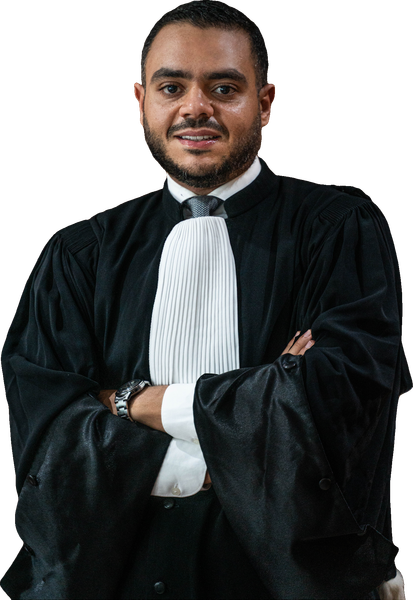
Maître Mouad Lahfaia
Lawyer at the Rabat Bar
This article reflects the author's views as at the date of publication. It does not constitute legal advice and is no substitute for an analysis of your particular situation.