

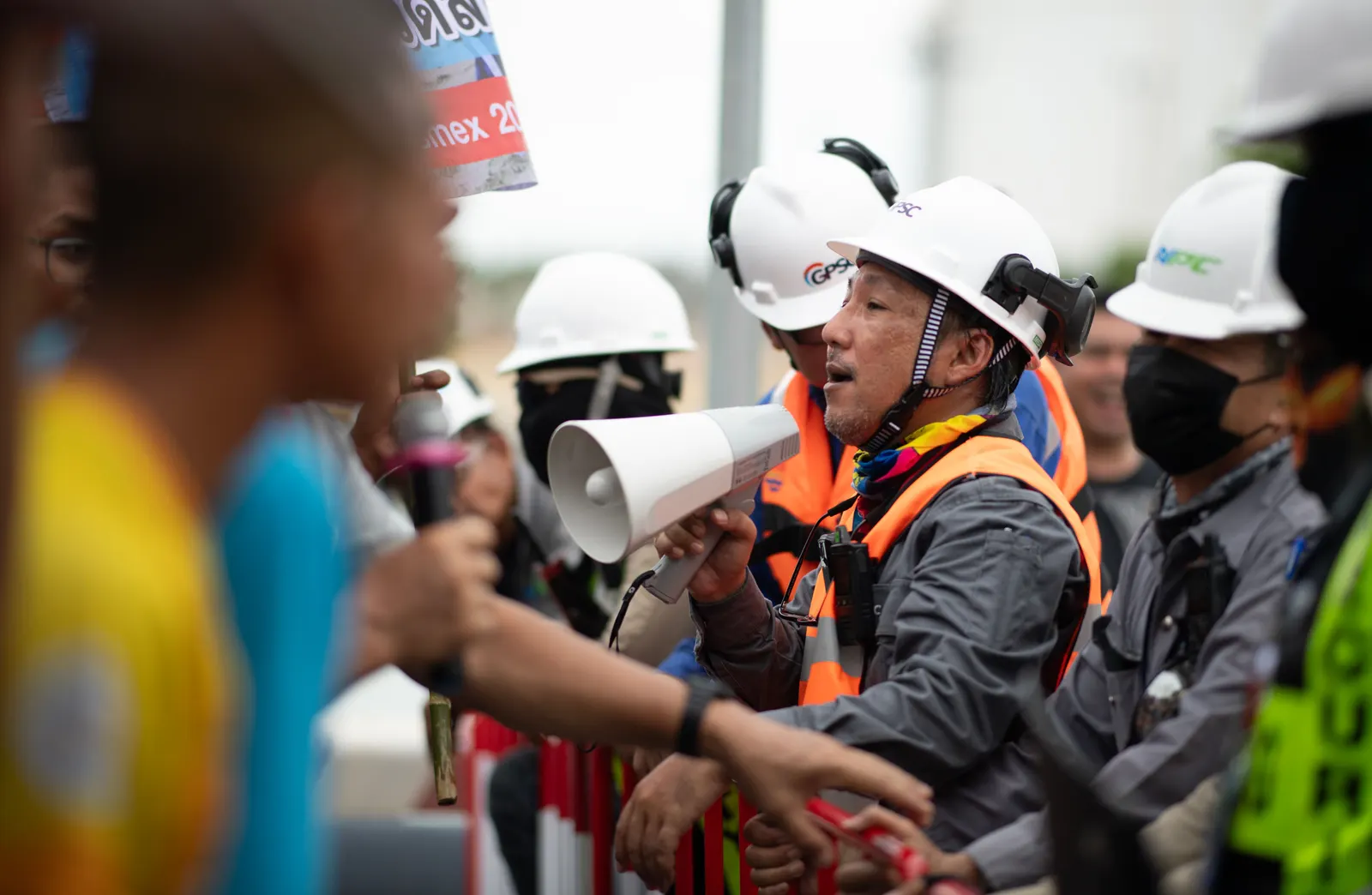
The right to strike is guaranteed by the 2011 Constitution, but the conditions for exercising it had to be set by an organic law. Organic Law 97.15, published in the Bulletin officiel (Official Gazette) on 24 March 2025, came into force on 24 September 2025. One year on, employers and employees need to know the steps: who can call a strike, what prior negotiation is required, what notice applies and what the consequences are. A practical overview.
Who is covered
The law defines a strike as a temporary, total or partial stoppage of work decided by the body that calls it. It applies to the private sector, meaning employees governed by the Labour Code (Law 65-99) and the categories listed in its Article 3, domestic workers, professionals and self-employed workers, as well as to the public sector.
Published in Bulletin officiel No. 7389 of 24 March 2025, the law came into force six months later, in line with its Article 33. Some of its arrangements, however, depend on implementing regulations.
Who can call a strike
The law identifies the authorised body according to the level of the action:
- Nationally: the most representative union or a union that is representative at national level.
- Within a company: the most representative union in the company, or a strike committee. This requires minutes signed by at least 25% of employees, a general meeting attended by at least 35% of them, and the committee has no more than 6 members.
- For professionals: their union.
Prior negotiation and notice
Before any strike, negotiation must be attempted. For a list of demands, the period is 45 days at national level and 15 days within a company, each extendable by 15 days. For a dispute over failure to meet obligations, it is 30 days nationally and 7 days within a company. In case of imminent danger, the strike may start immediately.
Notice must then be given: 7 days for a national strike (to the head of government and the ministries of the Interior, of Employment and of the sector), 5 days for local public services, companies, domestic workers and professionals (to the wali or governor in particular, and for professionals to the Interior ministry and the supervising authority).
Pay and protections
Employees are not paid for the duration of the strike. In return, a lawful strike cannot justify disciplinary action or dismissal. A strike carried out in breach of the law, on the other hand, is unlawful.
Protections work both ways. The employer may not replace strikers with people from outside the company, nor move machinery. Strikers, for their part, must respect the freedom to work of non-strikers, and occupying the premises is prohibited.
Minimum service
In vital services, a minimum service must be maintained: health, the courts, Bank Al-Maghrib, the ANRF, the Bulletin officiel, transport, telecommunications, medicines, water, electricity and waste collection, among others. Its level is set by regulation.
In 2026, the lawyers' protest movement was presented as a 'suspension' of activity rather than a strike, which raised the question of what the law says in such a situation. The point is mentioned here for context only.
In practice
Our advice, for employers and employees alike: document each step, because whether a strike is lawful depends on compliance with the procedure.
- Employers: keep records of negotiations, the list of demands and the notice received.
- Employers: organise minimum service where the business falls within vital services.
- Employees and unions: check who is entitled to call the strike and respect the negotiation periods.
- Employees and unions: give notice to the authorities designated by the law.
Sources
- Médias24, 23 September 2025: « Entrée en vigueur de la loi sur la grève : voici les principales dispositions à retenir (infographies) »
- Médias24, 31 August 2026: « Grève des avocats : que dit le droit ? »
Maître Mouad Lahfaia
Lawyer at the Rabat Bar
This article reflects the author's views as at the date of publication. It does not constitute legal advice and is no substitute for an analysis of your particular situation.